
- Key insight: The resignation follows a two-year campaign by activist investor Findell Capital, which owns approximately 9.5% of Oportun and criticized the company’s lending practices.
- Supporting data: Oportun’s stock price rose 25% following the announcement of Vazquez’s departure and the release of preliminary fourth-quarter financial results.
- What’s at stake: The incoming CEO faces decisions regarding the company’s future direction, specifically whether to maintain the self-imposed 36% APR cap on loans.
Overview bullets generated by AI with editorial review
Processing Content
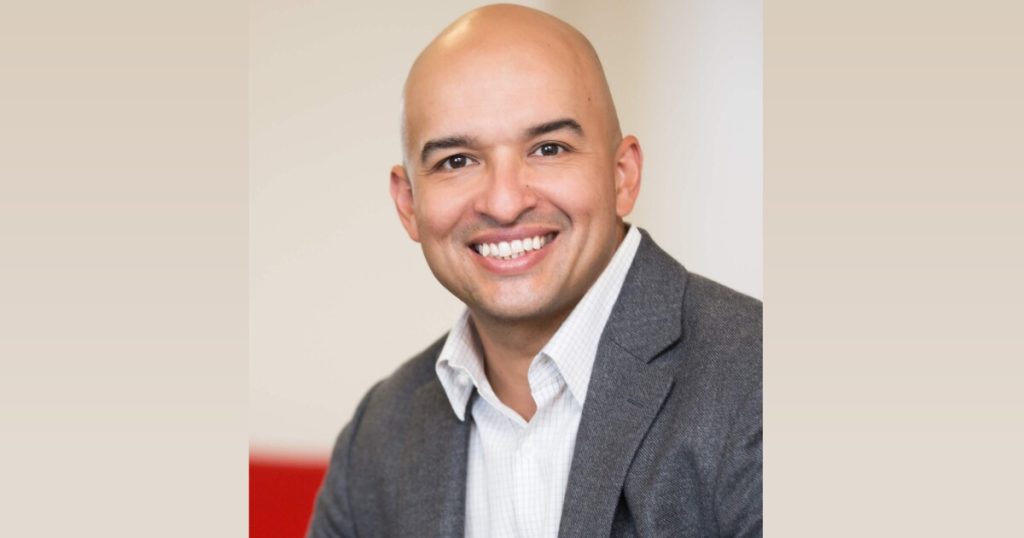
Raul Vazquez will step down as CEO of Oportun Financial after a 14-year tenure that saw the company transform from a regional lender into a national fintech, then face intense pressure from an activist investor over its profitability and strategic direction.
The San Carlos, California-based lender announced the leadership transition late Wednesday, saying that Vazquez will leave his post and the board of directors by April 3 but stay on as an advisor to the company until July 3 to facilitate the handover, according to
The board has engaged an executive search firm to identify a successor, according to the release.
Oportun’s stock price shot up 25% in response to the news of Vazquez’s departure, which accompanied preliminary fourth-quarter financial results for the company.
“It has been an honor to lead Oportun and to work alongside such a talented, dedicated and mission-driven team,” Vazquez said in the Wednesday release. “Together, we have built a disciplined, resilient and profitable business that has also delivered a meaningful and lasting impact to the communities we serve.”
While Oportun framed the departure as a mutual agreement to “begin a leadership transition,” the move comes six months after the company settled a contentious proxy fight with its second-largest shareholder, Findell Capital Management.
The conflict culminated in July 2025, when Oportun entered into a cooperation agreement with Findell. As part of the deal, the company expanded its board to include Warren Wilcox, a consumer credit veteran and the nominee put forward by Findell to challenge Vazquez.
Findell did not respond to a request for comment Thursday. Its agreement with Oportun, disclosed in
A battle over costs and direction
The leadership change is the culmination of a nearly two-year campaign by Findell Capital, which owns approximately 9.5% of Oportun stock, for Oportun to fix its lending practices.
The activist investor argued that Vazquez had “nearly wrecked” a strong core lending business through “disastrous acquisitions” and a bloated cost structure, according to
The firm specifically criticized Oportun’s 2021 acquisition of neobank Digit for $211 million — a deal that resulted in significant write-downs.
Findell also highlighted the disparity in shareholder returns between Oportun and its peer OneMain Financial. Since Oportun’s 2019 IPO, its stock had declined significantly while OneMain’s value more than doubled, according to
“The reality of this business is simple — Oportun has a loan book of approximately $3 billion that throws off $1 billion in interest revenue and, if operated in line with competitive benchmarks, should generate more than $250 million in pre-tax income,” wrote Brian Finn, Findell’s chief investment officer, in
Findell argued that the board, which lacked members with specific subprime lending experience, had failed to provide adequate oversight. The activist investor pushed for the election of Wilcox to replace Vazquez on the board.
Oportun board defends its guy
Oportun’s board vigorously defended Vazquez throughout the campaign and in the Wednesday announcement about his departure.
“Under Raul’s guidance, Oportun completed its initial public offering and evolved from a regional lender into a national financial services company, increasing revenue from approximately $30M in 2012 to over $950M today,” said Louis P. Miramontes, lead independent director of Oportun, in the Wednesday release.
Oportun’s management also argued that it had already proactively addressed Findell’s concerns before the proxy fight escalated.
“Since mid-2022, we have decreased operating expenses by approximately 40%, by eliminating over $240 million in annualized costs,” the board wrote in
Oportun founder takes Findell’s side
Pressure on Oportun intensified when the company’s founder, James Gutierrez, publicly backed Findell’s campaign in June 2025. Gutierrez was Vazquez’s immediate predecessor in the CEO position.
“It’s every founder’s dream to see their company serve millions of customers and generate over $1 billion in annual revenue,” Gutierrez wrote in
Gutierrez went on to say that Findell “has accurately diagnosed the root causes of this gap.”
Financial terms and preliminary results
As part of the transition plan, Vazquez will receive $1.1 million in cash severance, representing 18 months of his base salary. He will also receive a prorated lump sum payment for his 2026 service, according to
Additionally, the company agreed to accelerate the vesting of 100% of Vazquez’s outstanding unvested time-based restricted stock units.
Alongside the transition news, Oportun released preliminary financial results for the fourth quarter and full year of 2025. The company expects to report GAAP net income between $5 million and $8 million for the quarter, marking its fifth consecutive quarter of GAAP profitability, according to the Wednesday release.
Unresolved questions
While the leadership question is now settled, the future strategic direction of Oportun remains an open question for the incoming CEO.
One major point of contention has been Oportun’s self-imposed 36% annual percentage rate, or APR, cap. The company implemented the cap in 2020 following
However, both Findell and founder James Gutierrez argued that the cap artificially limits the company’s ability to price for risk and serve its target demographic of lower-income borrowers.
“Capping APRs on these starter loans undermines this model and cuts off millions from credit entirely,” Gutierrez wrote in his open letter to shareholders. “Oportun was founded to be an alternative to 400% payday loans — not to walk away from the people who need us most.”
It remains unclear if a new CEO will attempt to remove this cap to boost margins — a move that would carry reputational risks.
Analysts are taking a wait-and-see approach. Citizens JMP, the securities analysis arm of Citizens Bank, maintained a “Market Perform” rating on the stock following the announcement.
“We also remain on the sidelines given that it is unknown who will take over as the CEO,” wrote Citizens analysts David Scharf and Zachary Oster in a Thursday note to clients.
While Scharf and Oster acknowledged the company’s “impressive execution by management on rationalizing costs,” they noted that a premium valuation “likely requires a more consistent track record of stable loss rate guidance.”