
In 2019, two small funds were running the usual checks before investing in a fledgling mortgage lender registered to an address in the sleepy outskirts of a market town in North Essex.
They quickly hit a wall. Market Financial Solutions, then a small player in the niche world of bridging loans that offered “complex, property-backed lending” was unable to provide even simple answers to standard due diligence questions.
The information was so “patchy”, one of the potential investors said that he asked his team to drive to the properties the loans were secured on and spot-check them.
“On the individual loan details, there was incomplete information,” said Asif Godall, then the co-chief investment officer at credit fund Cairn Capital. “That’s not good enough.”
He was also put off by what he called the “watch-to-house ratio”.
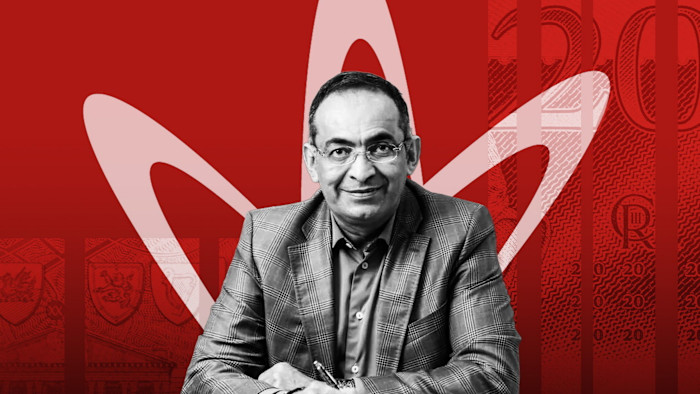
Paresh Raja, MFS’s director, sported a Richard Mille timepiece that can cost upwards of £200,000. A contact of Godall estimated the watch was about half the value of Raja’s north London home at the time. Godall decided to pass up on the opportunity to invest in MFS.
Yet some of Wall Street’s best known lenders — including Barclays, Jefferies and Santander, as well as US private credit firms Castlelake Capital and TPG — jumped in. They handed over hundreds of millions of pounds to companies owned by Raja, who is now at the centre of another meltdown in asset-backed lending that has sent shockwaves through Wall Street.
MFS suddenly collapsed last month amid allegations of fraud and double-pledging of collateral. It previously lent to a Bangladeshi minister linked to a property scandal.
Creditors to MFS claim a shortfall of £1.3bn, according to their court filing on Tuesday. They also allege to have discovered a network of borrowers seemingly tied to Raja. About £238mn is unaccounted for, they say.
The shortfall could deepen losses for firms ranging from US bank Wells Fargo to private equity giant Apollo Global Management through its structured credit arm Atlas SP Partners.
The debacle has forced another reckoning over underwriting standards — with markets already on edge over the twin failures of First Brands Group and Tricolor in the US last year amid fraud allegations — and added to fraud infestation fears on Wall Street that JPMorgan Chase chief executive Jamie Dimon has likened to “cockroaches”.

Lenders exposed to MFS have been quick to play down its effect. Ana Botín, chair of Santander, likened it to more a “jellyfish” sting for the bank in an interview with Bloomberg TV.
But like a jellyfish, there were signs that would hint at danger beneath. The Bank of England is among those now asking just how rigorous lenders’ checks were before they dived in.
MFS had humble beginnings. Founded in November 2006 with Pratibha Dewan, Raja’s wife, named as sole shareholder, the family business hardly grew during its first decade. Its main entity had made loans worth just £120,000 by 2015 and owed its creditors £200,000, according to corporate filings.
When Raja officially took control two years later, MFS’s activity picked up drastically. The group provided loans worth £72mn through its main entity by 2020, funded by almost £70mn of debt.
Raja, who is now in Dubai, created a complicated web of entities, many registered under the names of Greek and Roman gods to house the loans and fund his growing mortgage business.
MFS used these loans — mostly made up of high-interest, short-term debt that helps buyers acquire a new property before they have sold their existing home — as collateral to its own lenders.
MFS became a major player in the arcane world of bridge lending. The group’s £2bn lending portfolio compared to £13.7bn of total loan books across the UK sector at the end of September, according to the Bridging & Development Lenders Association.
Creditor allegations against Raja, set out in court on Tuesday, paint a damning picture of his business practices.
In an urgent application made by two creditors that have in turn been put into administration, Zircon Bridging Limited and Amber Bridging Limited, the MFS group entities alleged that eight companies that were supposedly “genuine borrowers” from MFS were in fact “closely connected” to the firm’s owner.
The companies are listed on corporate filings as sharing a London address that was also used by MFS before it entered administration. Men listed as directors and shareholders of corporate borrowers from MFS meanwhile hold positions at Magus Accounting Limited, which acted as the MFS group’s accountants and as auditor for certain group entities.
Most of the money lent via mortgages provided by Amber Bridging and Zircon Bridging “has been diverted to unknown bank accounts”, the creditors have alleged, adding that the whereabouts of as much as £238mn is “unknown”.
Lawyers for Raja at Mishcon de Reya said in a statement on Tuesday: “These are not sham companies. They are part of a larger group which are beneficially held for MFS and its associated lenders. The directors are in the process of placing these companies into administration and are fully co-operating with the office holders.”
Magus declined to comment.

But for one prospective investor who shunned MFS, red flags were plain to see years ago. He described the business as a “refinancing merry-go-round”.
Alarm bells started ringing in 2019 when portfolio managers realised that many of the outstanding bridging loans, which the company was offering to pledge as collateral, had been used to refinance older bridging loans also originated by MFS.
“A loan was being taken out of one [entity] and put into another. That’s what turned me off,” said Godall. “That wasn’t the way the loans were supposed to be originated.”
He was also put off by the fact that Raja had not disclosed the “re-bridging” until they asked about it.
A spokesperson for Raja declined to comment for this article.
Since MFS would refinance an original loan with debt from an investor, then finance the replacement loan with money borrowed from another investor when the first bridging loan came due, it looked like the company “never had any skin in the game”, said another investor who performed due diligence.
Each time the company organised a bridging loan, whether it was financing a new property transaction or refinancing existing debt, it would take a fee, according to people familiar with the process.
A sample MFS loan book worth about £100mn that was reviewed by an investor showed “almost all were rollovers”.
This type of “debt recycling” also raised concerns among potential investors that the company was artificially depressing default rates, said two of the people.
Still, Raja had no trouble raising funds. MFS reported in 2024 that it had secured £1.3bn in “new institutional funding to support increased lending demand” on top of £1.1bn it had already received from lenders.
MFS’s growth coincided with the property ambitions of one man: Saifuzzaman Chowdhury, the land minister in Bangladesh under Sheikh Hasina. MFS entities started lending to Chowdhury-linked companies in mid-2019, just after he took a post in the Dhaka government, and are listed as being involved in more than half of the 495 charges registered by the companies against properties in England and Wales.
Many of the loans tied to MFS were repaid after the fall of Sheikh Hasina’s regime in August and September 2024, a year before the UK’s National Crime Agency froze properties linked to Chowdhury worth about £185mn as part of “an ongoing civil investigation”.

Raja had by then moved into offices befitting his multimillion-pound business in London’s exclusive Mayfair neighbourhood and was single-handedly overseeing its lending.
He had ostentatious tastes and was a frequent diner at some of Mayfair’s most exclusive restaurants. One investor who crossed the threshold of MFS’s offices was unable to pick his way through the cramped space that was stuffed with Raja’s extensive sports memorabilia.
Meanwhile, Raja’s lending empire was split across different silos audited by several small accountancy firms rather than one consolidated group with a single auditor.
Berkeley Finch, a high street accountancy firm based in north London, audited MFS, which acted as the manager and servicer of loans provided by other entities in Raja’s group.
Berkeley Finch’s founder Ajay Yadav — who signed off on MFS’s accounts — also took out mortgages from Raja’s group, according to corporate filings.
Yadav did not respond to a request for comment. 9fin first reported on his mortgages from MFS.
MFS now boasted it could “deliver loans as large as £50mn in as little as three days”, yet some things had not changed.
It would still take the firm weeks to provide simple information to its lenders. When it did respond, many questions were left unanswered and entire sections came back blank.
By the end of 2024, private credit fund Centerbridge Partners had had enough. It asked MFS to return its investments after the company repeatedly failed to respond to requests for more information.
But for many of its other Wall Street creditors, the wake-up call came too late.

Barclays and Castlelake flagged irregularities late last year. Efforts to get more information from MFS again proved fruitless and Barclays opted to block certain transactions in November. The bank dealt a final blow to the group in January by freezing its accounts entirely.
Creditors surmised in court documents on Tuesday that Barclays “must have had serious concerns regarding money laundering, corruption or other criminality”.
MFS’s byzantine network of entities has made it difficult for advisers to work out exactly how much is missing.
Amber Bridging and Zircon Bridging have close to £1bn outstanding, according to three people familiar with the matter. Private equity company TPG and Apollo’s Atlas are among the list of creditors.
Meanwhile, Jefferies and Wells Fargo provided £100mn to MFS entities and Santander provided about £300mn in financing to another, according to people familiar with the situation. Australian lender Macquarie lent approximately £50mn to an entity called Solar.
As an army of advisers tries to dissect what remains of MFS, UK regulators are already pressing banks over their risk assessment and compliance checks and why it took so long to act.
“It’s double pledging of assets again,” said a senior executive at an affected bank. “The industry just falls for the same thing every time.”
When Barclays unveiled its third-quarter results in October, including £110mn losses from its exposure to Tricolor, chief executive CS Venkatakrishnan said lenders had to be prepared for all outcomes, including fraud.
But when asked if he agreed with Dimon that there were more “cockroaches” to come out, he demurred.
He responded: “I’m not an entomologist.”