
- Key insight: Every day, millions of American workers are caught in the same trap: Their bills are due before their paychecks arrive. Earned wage access solves this mismatch by letting workers access wages they have already earned on their own schedule, without interest, late fees or debt.
- What’s at stake: Conflating EWA with payday lending does not protect consumers, it confuses the debate and threatens to take away an affordable critical financial option for working families.
- Supporting data: A November 2025 study at the University of Oregon found that first-time EWA users saw their net monthly income increase by $334, an 11.5% gain. Users did not see increases in overdraft fees, interest charges or other bank fees.
Every day, millions of American workers are caught in the same trap: Their bills are due before their paychecks arrive. It’s a simple mismatch with real consequences, including overdraft fees, missed payments and the kind of financial stress that follows you.
Processing Content
A recent misguided BankThink column (“
Let’s look at what the evidence actually shows.
A
The Consumer Financial Protection Bureau itself has issued an
Responsible EWA providers already meet
We have seen what happens when lawmakers take the latter approach. When the state of Connecticut wrongfully reclassified EWA as a small loan, most providers exited the state. Over 151,000 families and 1,300 businesses
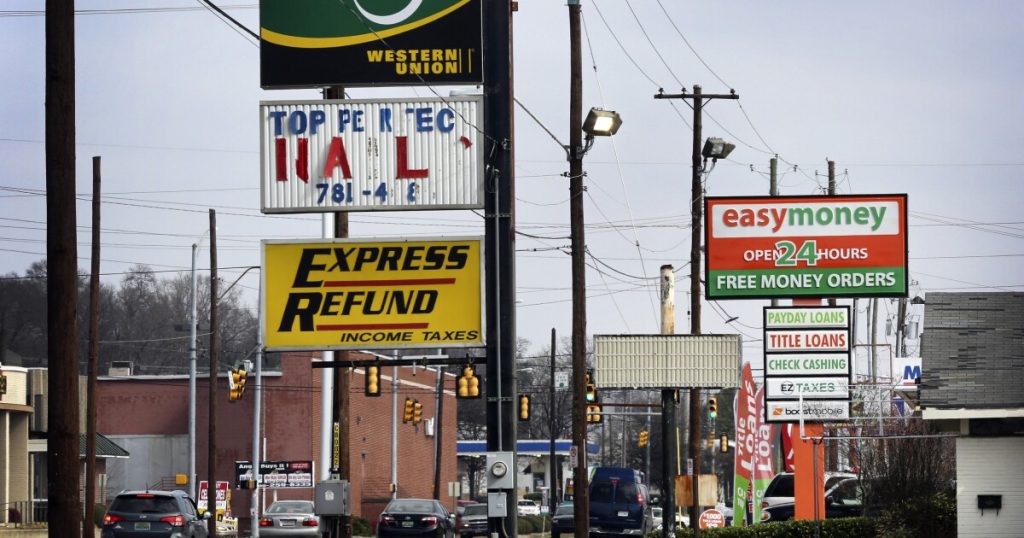
Claims that EWA apps rely on “dark patterns” are entirely baseless when applied to responsible providers. Industry standards require a genuinely free option for every user, prohibit any misleading language around tips, and mandate full transparency at every step of the transaction. The real dark pattern is lobbying to eliminate a product workers chose freely, and leaving them with high-cost alternatives like payday loans instead.
The column warns that proposed federal legislation would undermine state rate caps and the Military Lending Act. The American Fintech Council, or AFC, fully supports reasonable interest rate caps for loans, but this is beside the point: EWA providers do not charge interest, period. Applying APR calculations to a noncredit product is misleading at best. What
Further, neither existing state EWA bills nor the federal bill allow payday lenders to exploit broad loopholes in EWA rules. This argument is patently false, and countered by the fact that legislators carefully crafted how EWA is defined in statute to specifically make engagement in the market economically infeasible for payday lenders. Simply put, if a payday lender tried to offer EWA services as drafted in the legislation, they would either have to change their business model completely or violate the law.
Critics point to a small increase in non-sufficient funds fees as evidence of harm. The Oregon study did find an increase in NSF fees, approximately $9 per month. But context matters. Weighed against a $334 monthly income increase, this is a modest cost that does not meaningfully reduce financial well-being.
As CEO of an organization whose members collectively serve millions of workers across the country, I see the impact of EWA every day. And
The debate around EWA regulation deserves seriousness and accuracy. American workers deserve better than having their financial options stripped away based on misleading comparisons. They deserve a regulatory framework that protects them while preserving their right to access their own money on their own terms.