
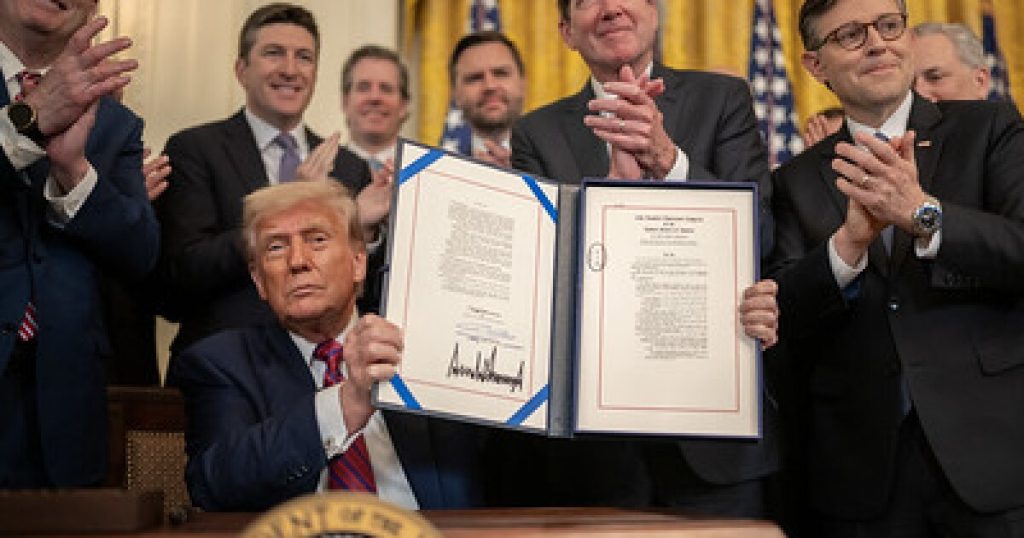
Daniel Torok/White House, via Wikimedia Commons
In the glow of last year’s passage of the GENIUS Act in the U.S., it’s easy to forget that most of the world has not yet formed a comprehensive
Processing Content
Yet expert predictions of dollar stablecoin demand project eye-watering growth. U.S. Treasury Secretary Scott Bessent, for instance, thinks that the stablecoin market
A question few are asking is: How will this pace of growth materialize without global adoption? Put differently, where will it come from if U.S. trade partners don’t yet have cooperative stablecoin policies?
The assumption appears to be that all nations will welcome access to dollar stablecoins. Corporates will gleefully embrace the cross-border transfer advantages, individuals in economies with unstable currencies will save in dollar-linked tokens, and the authorities will turn a blind eye.
This feels naïve.
No doubt there will be some uptake, especially among early tech adopters. But leaders struggling to keep their economies moving forward will not be so enthusiastic. They need dollars to pay for imports but will want to minimize the risk of capital flight leading to a weaker domestic currency and higher inflation. Put simply, they won’t want their economies to be flooded with dollar stablecoins.
Plus, domestic banks with considerable influence in the halls of power will have a thing or two to say about this foreign threat to their role in trade settlement.
So, we could soon start to see countries pass laws limiting dollar stablecoin use.
Even if financial authorities do not explicitly put limits on the use of dollar stablecoins, any doubt as to their approval will dampen adoption — no-one wants unwelcome attention from their regulators. And even if a corporate treasurer is comfortable with the risk (which would be rare for such a conservative profession), they will have boards and perhaps shareholders to answer to, not to mention the influence of their banking partners who hate the idea of being bypassed.
Furthermore, the assumption that cross-border payment efficiency will be a priority for all businesses is based on seeing global finance through the U.S. lens. Stablecoins are a better payment system than traditional rails, but their relevance is not evenly distributed.
For the world’s largest economy and issuer of the currency that settles over half of global trade, the potential efficiency benefits are enormous. For smaller economies, especially those in which banks play an outsized role, the net gains are not as obvious.
Also, one of the engines of U.S. growth over the decades has been financial innovation. Other economies run on different motors. In sum, stablecoin adoption is not a priority for all cultures and institutions.
This
The first jurisdiction to pass stablecoin laws was Japan, back in June 2022 with the legislation going live a year later. Yet the first regulated yen stablecoin, JPYC, didn’t launch until
The European Union followed soon after, with the Markets in Crypto Assets, or MiCA, regulation signed into law in May 2023 and the stablecoin provisions activating in June the following year. But
Other jurisdictions seem less concerned about dollar demand: The UAE, globally recognized as an emerging crypto hub, has had a stablecoin framework in place since 2024 and
The same goes for Hong Kong, which passed its stablecoin law in May 2025, but has yet to authorize any issuers, stressing prudence over speed.
And Singapore, which has had a stablecoin framework
Elsewhere, the eager acceptance of dollar stablecoins in jurisdictions not closely linked to the U.S. currency is far from guaranteed — they may be the most attractive stablecoin option given their deep liquidity and universal acceptance, but we can expect local barriers to expand while authorities figure out the balance between defense and support.
This political and regulatory resistance will slow global adoption by adding friction in the form of a patchwork of compliance rules that cast doubt on legitimacy and ease of conversion.
Of course, the U.S. may apply pressure on trading partners to encourage the use of dollar stablecoins in their jurisdictions; but for the sake of political continuity, each will most likely put domestic considerations first.
In sum, global dollar stablecoin adoption is not necessarily the no-brainer American forecasters seem to think. So, perhaps it’s time to revisit those optimistic forecasts.