
- Key insight: Two recent reports come to very different conclusions as to the feasibility of public blockchains for finance; the differences matter for global stablecoin adoption.
- What’s at stake: For those tasked with preventing crime, transaction privacy masks illicit activity and is a friend to criminals everywhere.
- Forward look: Most public blockchains are not private, but they can facilitate privacy. What’s more, harnessing their transparency and flexibility can help regulators focused on crime prevention become comfortable with that.
A common misunderstanding about blockchain technology is that it has
Processing Content
But embedded in this misunderstanding are assumptions that are worth examining more closely.
One is that public blockchains are private. Most of them are not. They are pseudonymous, in that addresses are identified by a sequence of characters but no real-world name. With effort, on-chain forensics can link addresses to specific entities.
Another is that privacy is only of interest to criminals. It’s not, it’s also for people and businesses that don’t want their on-chain activity widely broadcast. For instance, those who feel concealing their wealth is essential for personal safety, who wish to keep certain family or cultural purchases private, and who want to keep charity donations personal, to choose just a few examples.
A deeper question is whether privacy is a natural right or not — it’s not enshrined in most constitutions, including that of the United States, but it is an understandable self-protective instinct. Why else would we shut our front doors? And one of the permanent tensions of legislation and crime prevention is: To what extent should people give up their individual privileges for the “greater good”? Taken to its extreme, emphasizing crime prevention over freedom can easily lead to a dystopian society.
All this is relevant as public blockchains and the assets that move on them become an increasingly significant feature of global finance. To what extent should stablecoin users be able to acquire and move dollar equivalents without identifying themselves? Obviously, banks and other regulated institutions have to comply with know-your-customer and anti-money-laundering requirements. But those that use stablecoins outside of traditional financial infrastructure don’t, and there’s not much any agency can do to stop that from happening.
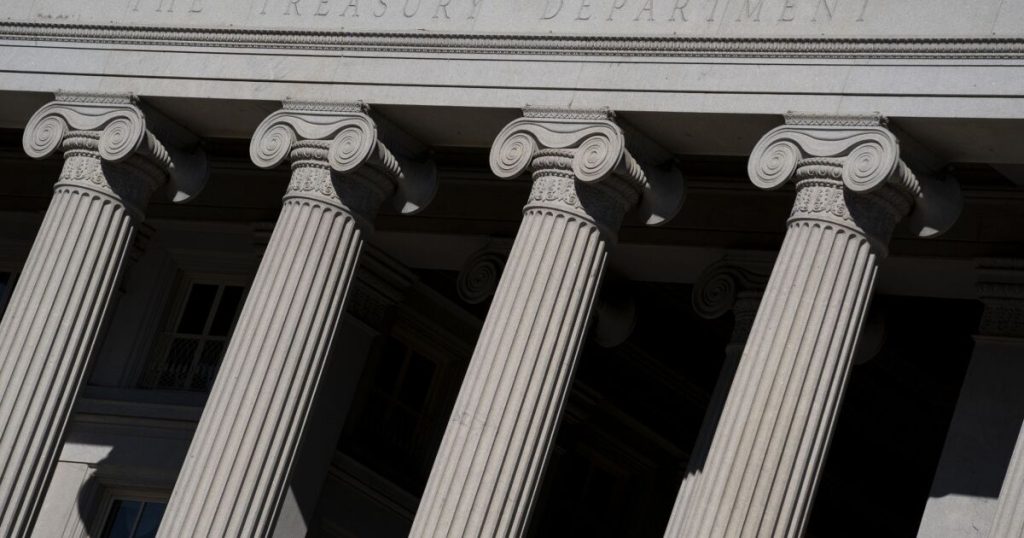
The privacy debate has been thrust onto the main stage with a U.S. Treasury report
The report is eye-opening in its assertion that privacy is a right of law-abiding individuals who wish to shield information on their assets or certain legitimate transactions. It also includes recommendations for rules around access to privacy apps, creating a type of “permissioned privacy” which — as crypto advocates point out — defeats the ultimate point.
Still, the Treasury’s approach is more respectful of the right to privacy than a report out
Essentially, the BIS acknowledges that people want financial privacy but insists that they can’t have it. The U.S. Treasury, on the other hand, is willing to attempt to find a balance between respecting what it accepts as a “right” with the need to prevent illicit finance.
What’s more, the Treasury report acknowledges that blockchain technology can help it do so.
It doesn’t go into detail, but it does mention “
Public blockchains are global, transparent and immutable, which makes illicit finance much harder to hide and its traceability much harder to obfuscate. Forensic analysis can provide actionable information without requiring invasive and impractical identification of global payment system users. Law enforcement can then request that stablecoin issuers
The advantages of blockchain finance in detecting and stopping illicit finance are particularly relevant
Echoing the typical European stance of protection over support for innovation, the BIS approach to the failure of current know-your-customer regulations in preventing illicit finance is to further infringe on user privacy by doubling down on identification requirements.
In contrast, the U.S. Treasury is taking a more forward-looking position: It acknowledges that new technologies are changing how people use money and how they protect their privacy, and that these technologies can be harnessed to support law enforcement.
The divergence between the two approaches highlights the wide range of attitudes to privacy as well as payments innovation among regulators. It also hints at how this is likely to impact global influence.
Even if dollar stablecoins weren’t pegged to the world’s most liquid and stable currency, the U.S. Treasury’s stance — a tentative respect for some semblance of privacy and a willingness to support investigation of on-chain solutions to crime prevention — should be enough to make them the preferred on-chain payment token, no matter how much authorities push their local alternatives.
As global finance migrates on-chain, fueled by dollar stablecoins, we could finally see a way to make the more oppressive provisions of the BSA unnecessary. Compliance requirements could be fulfilled without detailed identification, and AI tools can help blockchain forensics identify pockets and networks of suspicious activity more reliably and swiftly than with the traditional fragmented, opaque system.
Most public blockchains are not private, but they can facilitate privacy. What’s more, harnessing their transparency and flexibility can help regulators focused on crime prevention become comfortable with that.