
- Key Insight: Signs of tensions easing between employment and inflation helped underpin the Federal Open Market Committee’s decision to hold the federal funds rate between 3.5% to 3.75%.
- Expert Quote: “With inflation remaining elevated, the FOMC majority does not appear in any rush to make further rate moves.” — Mike Fratantoni, chief economist at the Mortgage Bankers Association.
- Forward Look: Looking ahead, investors and economists will be watching upcoming economic data for clues on the Fed’s next move. Key indicators include employment reports, inflation readings and consumer spending.
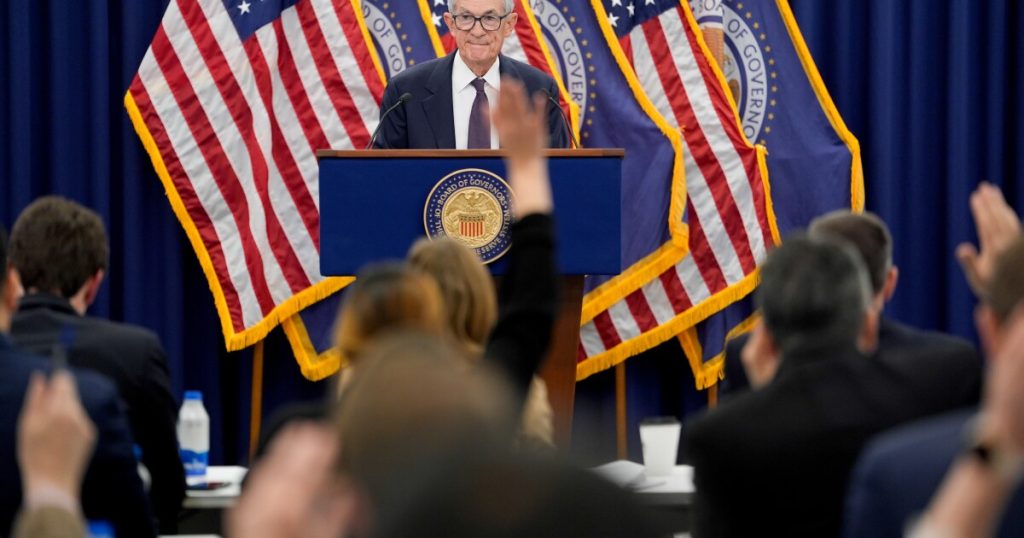
WASHINGTON — The Federal Open Market Committee voted overwhelmingly Wednesday to keep interest rates unchanged, a development broadly in line with market expectations and foreshadowed last month by Fed Chair Jerome Powell.
Easing tensions between the two sides of the Fed’s dual mandate — maximum employment and price stability — helped underpin the decision to hold rates steady.
Processing Content
The central bank’s target range for the federal funds rate
Despite
“There was broad support on the committee for holding today, including among nonvoters,” Powell said at the
Powell said recent economic data suggest risks to both employment and inflation have “diminished a bit,” reducing the need for an immediate policy change. He said the committee remains “well positioned” to make decisions on a meeting-by-meeting basis as new data emerges.
“We’ll find our way forward as the data evolves,” Powell said.
Data from December showed inflation at 2.7%, still above the Fed’s 2% target but largely in line with prior months. At the same time,
Powell offered no guidance on the timing of future policy moves. In December, he signaled a wait-and-see approach, suggesting policymakers would pause until there is greater clarity about the economic outlook.
Mike Fratantoni, chief economist at the Mortgage Bankers Association, said the pause could continue until either inflation or employment shows renewed stress.
“While not a unanimous vote, there does seem to be a clear and consistent majority in favor of a pause in this rate-cutting cycle, a pause that likely continues unless or until the job market weakens further,” Fratantoni said in a statement. “With inflation remaining elevated, the FOMC majority does not appear in any rush to make further rate moves.”
Selma Hepp, chief economist at data services provider Cotality, said the Fed’s move reflects an effort to bring inflation closer to its target amid lingering uncertainty.
“While the Federal Reserve is maintaining interest rates to bring inflation closer to its target, uncertainties surrounding the economy remain elevated,” Hepp said. “The job market remains a sticking point, even though the economy as a whole remains on solid ground.”
Gregory Daco, chief economist at EY-Parthenon, added in a statement he expects 50 basis points of easing through 2026, but not any time soon.
“As labor-market fundamentals gradually soften and PCE inflation hovers just below 3% in the first half of the year before easing toward 2.5% by year-end,” Daco said. “In this context, the first 2026 rate cut is unlikely to occur before June.
Wednesday’s news conference was one of Powell’s final appearances as chair before his term expires in May, though his term as a Fed governor runs through January 2028.
Powell declined to discuss his future plans and deflected questions about Justice Department grand jury subpoenas related to his prior testimony on renovation costs at the Fed’s headquarters.
He did address his recent attendance at the Supreme Court for a case
Powell described the case as “perhaps the most important legal case in the Fed’s 113-year history.”
“As I thought about it, I thought it might be hard to explain why I didn’t attend,” he said.
Powell also offered advice to his eventual successor, urging the next Fed chair to avoid political entanglements.
He said the Fed’s obligation is to engage with Congress and the public to maintain democratic legitimacy. “If you want democratic legitimacy, you earn it by your interaction with our elected overseers,” Powell said.
“Don’t get pulled into elected politics,” Powell warned. “Don’t do it.”