
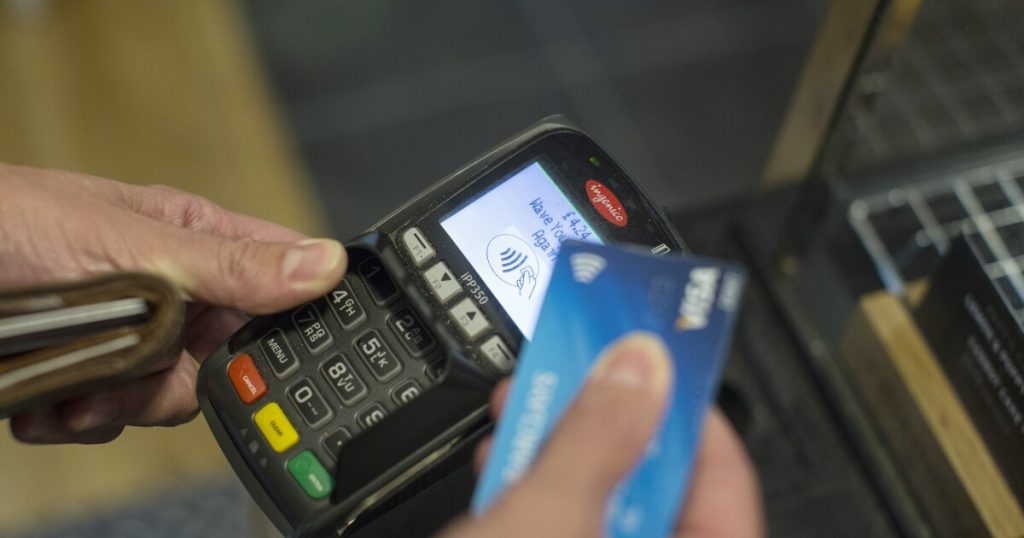
- Key insights: Ingenico is turning on stablecoin payments on its Android payment terminals at the point of sale.
- What’s at stake: Where stablecoins will widely be adopted is still up for debate, and experts have questioned if there’s demand for stablecoin payments to merchants.
- Forward look: More merchants are accepting payments from digital wallets, and some are warming up to cryptocurrency payments, according to JD Power.
As banks and payment companies navigate potential use cases for stablecoins, Ingenico is looking to plant an early flag in point-of-sale payments.
Processing Content
Ingenico is enabling stablecoin payments at the point of sale through a partnership with WalletConnect, an open-source protocol that connects digital wallets to applications.
The feature will allow merchants with Android payment terminals to accept stablecoin payments in five digital currencies, including USDT, USDC and EURC, from more than 700 wallets integrated with WalletConnect, according to Ingenico. The service is designed for merchants in the retail, hospitality, transportation, fuel, parking, vending, and self-service industries.
“Stablecoin acceptance has already over the last few years become more mainstream in cross-border money transfers, for example. It’s becoming more mainstream in ecommerce. What’s left? That’s the point of sale,” Ingenico CEO Floris de Kort told American Banker.
“It’s a logical next step for Ingenico to look at,” said de Kort, who said that the transition away from legacy hardware to Android-powered payment terminals was what made the internally-developed software possible.
The rollout comes as banks and payments companies work to
But consumer demand for stablecoin-enabled, point-of-sale payments has been limited, and will likely remain so for some time, Aaron Press, a research director at IDC, told American Banker.
“I can see some potential use cases in markets where the local currency is unstable, streamlining the use of stablecoins. This assumes local currency controls allow for this, which is not a given,” Press said. “There may also be some utility for travelers who want to transact in local currency, but they would need to trust that there will be a meaningful range of merchants who accept stablecoins.”
Ingenico — which has historically been known as a payment terminal manufacturer and has since ventured into software development — is hoping to build the infrastructure to power stablecoin payments for merchants if and when demand surfaces while also maintaining its relevance in the changing payments industry.
“Having widespread acceptance of dollar stablecoins at the physical point of sale is a necessary but insufficient condition for dollar stablecoins being used for retail payments in lieu of Visa, Mastercard, American Express, and Discover payment cards,” Eric Grover, principal at Intrepid Ventures, told American Banker. “It’s nice to be first, but if – and I think it’s still a big if – there’s demand for using stablecoins for retail payments in the US and other mature markets, other POS system providers will follow suit.”
There are signs that merchants are warming up to accepting digital wallet and cryptocurrency payments, according to a merchant services study from JD Power. A vast majority of U.S. merchants – 92% – accept payments via digital wallets, an increase of 4 percentage points since 2024. And cryptocurrency adoption among small businesses in the U.S. was 19%, an increase of 4 percentage points from 2025. Thirty-seven percent of merchants had a favorable view of cryptocurrency, and a third of non-accepting merchants said they would likely accept crypto payments if their payments provider offered the option.
The move shares similarities to the approach other payment processors such as Stripe are taking with merchant acceptance, Tony DeSanctis, a senior director at Cornerstone Advisors, told American Banker.
Payment processors make their money on transactions, so it is in their favor to enable as many transaction types as possible.
“They are very much building the train tracks before there are many trains that want to take the trip,” DeSanctis said. “The benefit is being able to tell your merchants you have the ability to accept stablecoins should the demand ever become significant.”